Articles
We share our experience of launching facilities, integrations and implementations.
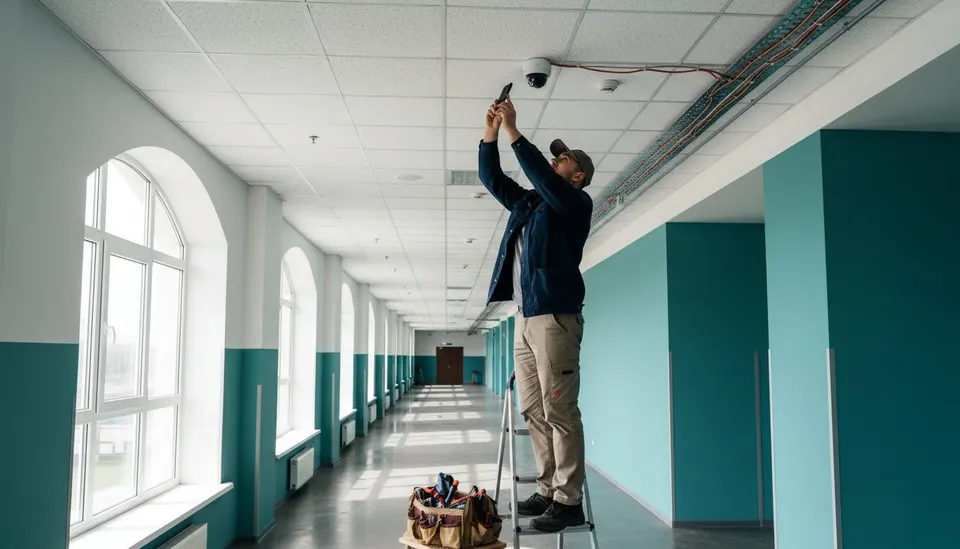
Bot for field technicians: photo report, geometry, act
We disassemble the bot for installers and service engineers: what he can do, how much re-visits cost, whether it's legal to track geolocation, why you can't trust the geometry in the photo, and when the act in the messenger is legally valid.

Search for Claude Code in Russia: selection and protection
The final article of the series on free search for Claude Code: what works for users from Russia, what is dangerous about the MCP search server, what is known about the quality and consumption of tokens, and the final cheat sheet "what to choose".
Browsers, scrapers, and closed services for AI agents
We analyze workarounds without a paid search API: an agent-controlled browser, Google scrapers, Crawl4AI and Firecrawl on our server, Gemini search delegation. At the end is a table of services closed in 2025-2026.
Search without keys for Claude Code: SearXNG and others
Your SearXNG remains the most reliable free search for Claude Code: no keys, no quotas, no intermediary. We analyze its setup and trap with JSON, DuckDuckGo server, 12 projects with GitHub and local research stacks.
How to test a bot idea before development
We are analyzing how to figure out in a few weeks whether customers will use the bot: an interview without prompts, a demand test, a sample calculation, a price using the Van Westendorp method and requirements for consent to personal data.
Search APIs with a free rate for Claude Code
We compare 15 services with the API: who has a free volume replenished every month, who is issued once, where the card is needed, which MCP endpoints work without installation and without a key. Data for September 2026.
Search in Claude Code: WebSearch, WebFetch and MCP
We analyze the built-in WebSearch and WebFetch tools in Claude Code: what they return, how much they cost, where they don't work and why the search engine can't be replaced in them. And we show you how to connect a search MCP server with one command and not step on a rake with scope, keys and permissions.
MicroSaaS in 2026: How to Choose a Niche: Market, Economy, Risks and Opportunity Map based on Stripe Index, Stack Overflow, Carta and industry research data (Part 3)
Based on the selection criteria — money in the niche is already paid through Stripe, low saturation with competitors at the same time, verticality (the solution is tailored to a specific profession, and not " for everyone ") and quick payback for the client — seven areas can be identified with different ratios of risk and potential profitability.
MicroSaaS in 2026: How to Choose a Niche: Market, Economy, Risks and Opportunity Map based on Stripe Index, Stack Overflow, Carta and industry research data (Part 2)
An "AI wrapper " is a product that simply adds a user interface on top of someone else's neural network model - for example, GPT from OpenAI — by calling it through the API, but without creating its own technology, data, or embedding in the client's workflow.
MicroSaaS in 2026: How to Choose a Niche: Market, Economy, Risks and Opportunity Map based on Stripe Index, Stack Overflow, Carta and industry research data (Part 1)
MicroSaaS is one of the few segments of the software market where an individual developer or a team of two or three people can still build a profitable business without venture capital money. Over the past two years, artificial intelligence has been added to this, which has sharply reduced the cost of development, and at the same time, the cooling of seed investments (the first external financing that a startup attracts from investors), forcing founders to look for a quick way to profit, rather than scale.