How to control field technicians through a bot and sign certificates?
We disassemble the bot for installers and service engineers: what he can do, how much re-visits cost, whether it's legal to track geolocation, why you can't trust the geometry in the photo, and when the act in the messenger is legally valid.
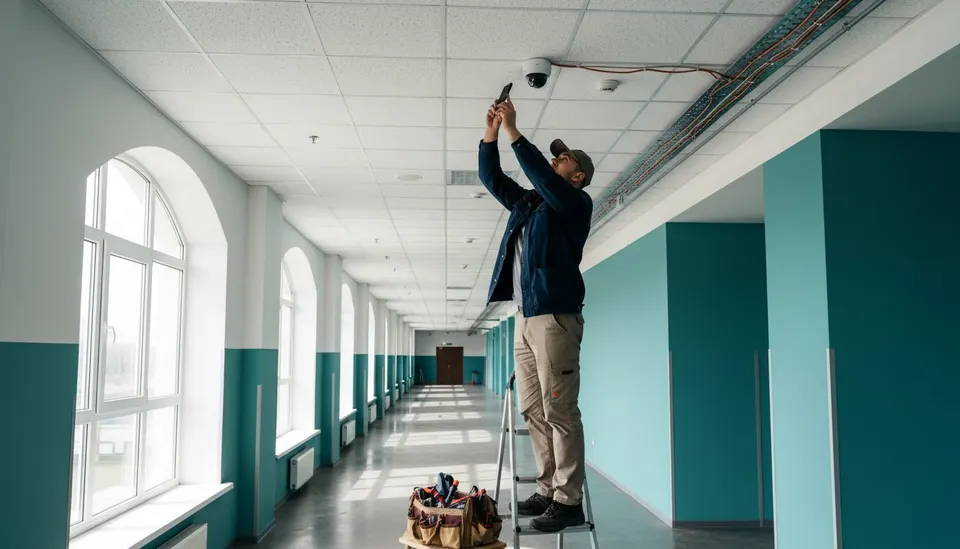
Briefly
- A bot in a messenger (MAX, Telegram) can issue a request to a technician, conduct it on a checklist, accept a photo report with coordinates and collect customer confirmation.
- Repeated departures are expensive: according to the Aberdeen Group, if the task is not solved the first time, an average of 1.6 more departures are required.
- You can't trust the geometry in the photo: it's easy to replace it, and the messenger erases it when sending it "as a photo". Coordinates must be requested separately at the time the report is sent.
- The act confirmed in the bot is equivalent to a paper one only if an agreement has been concluded with the customer on the use of a simple electronic signature (63-FZ, Articles 6 and 9).
- Courts often do not require the employee's consent to track geolocation, but lawyers advise to issue it. It's cheaper than a dispute.
What should a bot for field technicians be able to do?
The minimum set is to issue an application, conduct a checklist, take photos and coordinates, collect customer confirmation and transfer everything to the accounting system. The rest are add—ons.
Field Service Management (FSM) is a class of programs for managing field employees: planning, routes, orders, reports. According to MarketsandMarkets, the global market for such systems in 2025 amounted to $5.1 billion, and by 2030 it will grow to $9.17 billion (MarketsandMarkets, 05.11.2025). We have not found any open estimates of the Russian FSM market.
The bot for technicians is a lightweight version of the same idea inside the messenger, which employees already use. A typical scenario for an installer of low-voltage systems or a service engineer of a thermal spa complex:
- The dispatcher creates an application in 1C or help desk, the bot sends it to the technician with the address, contact and description.
- The technician presses "Arrived", the bot requests the current coordinates.
- The bot keeps a checklist: items for a specific type of work, mandatory photos "before" and "after", serial numbers of equipment.
- The technician notes the materials used and deviations, if any.
- The customer's representative confirms the execution: in his bot, by link or code.
- The report, photo and report go into the accounting system, the dispatcher sees the closed application.
The main value here is not in "digitalization", but in the fact that the report is collected at the facility, and not in the evening from memory. You can not close the application without a photo shield while you are on the spot, and do not forget to write down the serial number of the camera.
How much does the field service lose on repeated trips and paperwork?
Most of all — on repeated trips: each of them is paid, and the technician does not fulfill new orders at this time.
Aberdeen Group in a 2013 study estimated that on average 75% of tasks are solved from the first check-out. The best companies have this figure — 89%, the rest — 71%. If the task is not solved the first time, you need an average of 1.6 more trips. One trip, according to the report, costs $200-300 (Aberdeen Group, March 2013). It also notes how this is related to money. If more than 80% of tasks were solved the first time, service revenue for the year increased by 6.2%. If it is less than 50%, it has decreased by 2.8%. The data is foreign and old, but the mechanism is universal.
First-time fix rate is the proportion of applications closed from the first check—out. The bot affects it indirectly. The checklist reminds you to take the necessary materials, the photo "before" helps the engineer in the office to understand the task in advance, and the full report reduces the number of trips to "finish".
The second loss item is administrative work. Salesforce surveyed 6,500 service professionals in 40 countries and 350 mobile employees in the United States in January 2026. According to him, technicians spend more than 7 hours a week on such work, which is 18% of working time. 81% overwork at least once a month due to administrative tasks (Salesforce, Field Service Trends). In the previous Salesforce report, 74% of mobile employees said that their workload had increased over the year (Salesforce State of Service, 04/23/2024).
What to choose: a messenger bot or a ready-made FSM system?
The bot is suitable when there are few technicians, the process is simple and it is important to start quickly. A ready-made FSM system is needed when route planning, spare parts warehouse, offline mode and dozens of employees are required.
There are several mature systems for field services in Russia. Here's what the vendors themselves say for September 2026:
| Solution | What is stated |
|---|---|
| HubEx | GPS monitoring, photo reports, electronic certificates, client signature, work without Internet; cloud or installation at the customer; registry of Russian software |
| Okdesk | Help desk and mobile application for visiting specialists, access to data without the Internet; "1000+ companies"; register of Russian software |
| Mobifors | Coordinate tracker, photo reports, integration with 1C via REST API; registry of Russian software No. 19001; "more than 800 companies" |
| Planado | Cloud service of electronic outfits, has been operating since 2014: GPS, mileage tracking, checklists, client cabinet, offline mode with synchronization |
The comparison is essentially:
| Criteria | Bot in messenger | FSM-system with an application |
|---|---|---|
| What to install equipment for | Nothing if the messenger already exists | A separate application |
| Work without communication | Limited | Declared in a number of systems |
| Coordinate substitution control | No access to device data | Possible at the application level |
| Flexibility for your process | High, made for you | Within the product settings |
| Dependence on the messenger | High | I don't |
A hybrid is often reasonable: a bot for contractors and small teams, an FSM system for regular service, and everything converges in 1C. We collect such bundles as part of the integration of systems and integrations with 1C.

Is it legal to track a technician's geolocation?
During working hours and for work purposes — as a rule, yes, but it is safer to get the written consent of the employee and fix the control in the documents.
Geolocation, by which you can understand where a particular person is located, is his personal data. The courts often look at the issue differently. The Law enforcement Monitoring of St. Petersburg State University examined 52 cases from 2018-2020 from 38 regions. Conclusion: courts usually consider geolocation to be part of the employer's management authority and do not require written consent. The authors of the monitoring do not agree with this and recommend introducing geolocation through changing the terms of the employment contract, with the consent and notification of the employee (Law Enforcement Monitoring of St. Petersburg State University, 09.09.2021).
The risk of error is palpable. Processing of personal data without consent or with consent issued with violations costs the company from 300 to 700 thousand rubles under part 2 of Article 13.11 of the Administrative Code (Code of Administrative Offenses, Article 13.11). From September 1, 2025, consent is formalized in a separate document, and not a clause in the employment contract (152-FZ, Article 9).
What we recommend to fix:
- the purpose is to confirm arrival at the facility and record working hours, not to observe personal life;
- when the coordinates are collected — at the time of the "arrived" and "completed" marks, or only during the work shift;
- who sees the data and how much is stored;
- separate written consent of the employee and familiarization with the local act under the signature;
- refusal of tracking on personal devices and cars without the explicit voluntary consent of the owner.
Marking coordinates at key moments raises fewer questions than continuous tracking, and it is enough for most tasks.
How to make sure that the technician was really at the facility?
Check the coordinates that the bot requested at the time of the mark, with the time of receipt on the server and with the photo taken right there. The geometry inside the photo file is not a proof.
EXIF is the service data inside the photo file: date, phone model, sometimes GPS coordinates. They can be rewritten in a regular program on a computer (SecurityLab). In addition, Telegram, when sending "as a photo", squeezes the image, and the metadata disappears. When sending "as a file", they are usually saved, but on Android there were cases when GPS was erased and so (Telegram bug report, 07/19/2022).
On Android, you can substitute the phone coordinates themselves through a "fictitious location". The application is able to notice this: the isMock() system method reports that the coordinates came from a test provider (Android Developers). The bot in the messenger does not receive such information.
What is really available in messengers for September 2026:
- Telegram. The location request button works in private chats. A bot can receive a geo-position broadcast for a period of 1 minute to 24 hours or without a time limit. Together with the coordinates comes an inaccuracy radius of up to 1500 m (Telegram Bot API 10.3, 08/24/2026). Mini-applications, that is, web interfaces inside the messenger, can request device geolocation and store data on the phone (Telegram Mini Apps).
- MAX. The Bot API has a geolocation request button, images are accepted up to 50 MB, files up to 4 GB (MAX for developers). We did not find the geolocation method in the description of the MAX Bridge mini-application library as of September 2026 (MAX Bridge).
A practical scheme: the technician presses "Arrived", the bot requests the current point, the server compares it with the address of the object and records its time. Photos are taken immediately after the mark, and the bot accepts them only during the specified window. This is not an absolute protection, but forgery becomes noticeably more difficult, and discrepancies are visible in the report.
Ready-made solutions for field services
Tasks for the day in the messenger, documents for each object and monitoring that the client was answered on time.
Courier service in Telegram
The courier opens the list of deliveries for today in Telegram and notes "on the way", "delivered" or "canceled". The dispatcher conducts tasks in the web admin panel or Google spreadsheet, the client sees the status of his orders. You don't need to install a separate application.
Request a KPDocument management system: contracts, accounts, closing
Contracts, additional agreements, invoices, acts, UPD and payments for each project in one system. Bank statements are distributed by themselves, the report shows that it has not been paid or signed, and the AI assistant in Telegram issues an invoice by voice message.
Request a KPAI control of work chats
The bot reads working Telegram groups, decrypts voice messages and sends a report to the manager every day: what was discussed, what tasks are not closed, how the team works. If the client waits longer than normal for the manager's response, the bot raises the alarm.
Request a KPDoes the act confirmed in the messenger have legal force?
Yes, if the parties have agreed in advance that such confirmation is considered a simple electronic signature, and have determined how the signatory is established. Without such an agreement, correspondence is more proof than a signed act.
A simple electronic signature (PEP) is a signature that "through the use of codes, passwords or other means confirms the formation of an electronic signature by a certain person" (63—FZ, Article 5). Pressing the "Confirm" button in a bot with a one-time code technically fits this definition.
A document with a PEP is equivalent to a paper document with a handwritten signature only in cases established by laws, regulations "or an agreement between participants in electronic interaction" (63-FZ, Article 6, Part 2). Such an agreement should define the rules by which the signatory is established and oblige the parties to keep the PEP key secret (63-FZ, 9). According to the law on accounting, the primary document, including the act, may be electronic if it is signed with an electronic signature (402-FZ, Article 9, part 5).
Practically, this means the following:
- A section or appendix on electronic interaction is added to the contract with the customer: who is authorized to confirm certificates, through which channel, and how the code is issued and verified.
- The bot records who, when and from which account confirmed the report, and saves the final document with this data.
- For large customers with an EDI operator, it is better to duplicate the final act there with an enhanced signature, and use the bot for operational confirmation at the facility.
Courts take correspondence in messengers into account. According to Interfax, on March 23, 2026, the economic board of the Supreme Court in the dispute between FSUE GVSU-12 and Fortex-Water Technologies took into account the correspondence in the messenger when evaluating the agreement on deferral of payments. The court referred to Articles 160 and 434 of the Civil Code of the Russian Federation: a written contract can be concluded by exchanging electronic documents. This is a decision on a specific dispute, so it is more reliable to directly prescribe the procedure for confirming acts in the contract and check it with a lawyer.
Is it possible to make out the documents of the technician through the personnel EDI?
It is possible, but only internal personnel documents between the employee and the employer, and with restrictions. The act for the customer does not apply to personnel electronic document management (EDC).
CED is an electronic document flow between an employer and an employee under Articles 22.1–22.3 of the Labor Code, introduced by Law No. 377-FZ of 11/22/2021 (Guarantor). The employer introduces it by his decision. The transition is possible with the written consent of the employee, except for those who were accepted after December 31, 2021 and did not have seniority on that date. The costs of the employee's electronic signature are borne by the employer (RF Labor Code, Article 22.2).
Workbooks, certificates of industrial accidents, orders of dismissal and documents on instruction on labor protection are not transferred to electronic form (Labor Code of the Russian Federation, Article 22.1). This is important for installers: you can't issue a document about the briefing before working at height in the personnel EDO, and the bot won't replace it either.
Which messenger should I choose for my work bot: MAX or Telegram?
As of September 2026, it is reasonable to make MAX the main channel for a working bot, and keep Telegram and the web form on your site spare. The main reason is that Telegram in Russia is slowed down, and photos are the worst in it, that is, the very essence of the photo report.
According to Mediascope, retold by 3DNews, in June 2026, MAX's monthly audience was 86.26 million people, Telegram — 75.69 million, WhatsApp — 63.51 million. Since July 31, 2026, MTS, MegaFon, Beeline and T2 do not charge for MAX traffic (Vedomosti, 08/27/2026). For a traveling technician, this is a direct saving on mobile Internet.
Roskomnadzor officially confirmed the slowdown of Telegram on February 10, 2026 and promised to impose restrictions consistently (Habr, 02/11/2026). On September 16, users again complained that photos and videos were not loaded, but there was no official information about the complete blocking (Hi-Tech Mail, 09/16/2026). WhatsApp is not suitable for a working bot: since February 11, 2026, it does not work in Russia without a VPN (Habr, 12.02.2026).
MAX also has a limitation: since the summer of 2026, the application is not available in the App Store and Google Play. Already installed applications work, Android MAX can be downloaded from RuStore and other stores (iXBT, 07/16/2026). If some of the technicians have new iPhones, think of a backup channel for them in advance.
| Opportunity | MAX | Telegram |
|---|---|---|
| Request geolocation with a button | Yes | Yes, in private chats |
| Geo position broadcast | Not found in the documentation | Up to 24 hours or no limit |
| Photo size | Images up to 50 MB | The bot downloads files up to 20 MB |
| Geolocation in the mini-app | MAX Bridge was not found in the description | There is |
| Who can connect the bot | Legal entities, sole proprietors and self—employed - residents of the Russian Federation | Any Telegram user via @BotFather |
| Availability in Russia, September 2026 | Works, but not in the App Store and Google Play | Officially slowed down, works intermittently |
The data in the table is taken from the MAX documentation for developers, the rules for connecting MAX mini-applications, the Telegram Bot API, and the description of Telegram bots for September 2026. "Not found" means that the function is not described in the documentation, not that it is definitely not there. If the bot logic is transferred to your server, you can change the channel or connect a second one without reworking the entire solution. This is how we design chatbots for clients.
What should I do if there is no connection at the facility?
The bot in the messenger does not work without the Internet, so a backup scenario is needed for basements, technical floors and suburban facilities.
Options from simple to complex:
- the technician takes a photo with the phone's camera and sends it when the network appears; the bot receives a report marked "sent later", and takes the coordinates at the time of the "arrived" mark at the entrance;
- the mini-application stores a draft of the checklist in the phone's memory and sends it when a connection appears (Telegram has DeviceStorage storage for this);
- for objects where there is no systematic connection, it is better to have an FSM application with the declared offline mode, for example, HubEx and Okdesk.
If there is no connection in the server room or technical room of your own facility, sometimes it is easier to solve this infrastructurally: Wi-Fi or a signal booster. This is the task of low-voltage systems.
Checklist before launching a bot for technicians
- The process is described: from creating an application to closing the act and getting the data into 1C.
- For each type of work there is a checklist with mandatory photos.
- Employees' consent to the processing of geodata and a local control act have been issued.
- In contracts with customers there is an agreement on a simple electronic signature.
- The main channel is MAX, the spare channel is Telegram or a web form on the site; it has been verified that all technicians have the application installed.
- It is clear what to do at facilities without communication.
- Before the launch, the initial share of applications closed from the first check-out was calculated so that there would be something to compare with.
How we do it
Audit of the on-site process
We analyze the application path from the call to the closing of the act: where photos and materials are lost, how many repeat visits, how documents get into 1C. We check contracts with customers and geolocation documents.
The scheme of the process, the initial figures and the list of legal improvements
Pilot on the same team
We launch a bot with checklists and marks on one type of work. The main channel is MAX, the spare channel is Telegram or a web form so that the report reaches you when the messenger crashes.
Real reports from objects and comments from technicians
Integration and acts
We link the bot to 1C, help desk or FSM-system. We set up confirmation of acts by the customer according to the agreed procedure of a simple electronic signature.
Applications, photos and acts are entered into the accounting system without manual input
Training of technicians and dispatchers
We show scenarios, including work without communication and disputes with coordinates. We are preparing short instructions for new employees.
Teams close applications in the bot without the help of the office
Support and development
We monitor the proportion of applications closed from the first check-out and channel failures. We are finalizing the checklists for actual errors.
The bot changes along with the process and messengers
Let's show a bot for your technicians
Tell us how many field employees you have and how reports and certificates are submitted now. We will propose a scenario and a pilot timeline.
- We will respond within a working day
- Let's clarify the task and limitations
- We will offer a solution and pilot terms
Is it more convenient in the messenger?
+79262103289Employees respond from 9:00 to 23:00 Moscow time, every day
How can we help

Development
When a typical program does not fit the process, and the tables no longer cope. We do it on ready-made platforms where it is reasonable, and we write from scratch where it is needed.
Веб-приложенияREST APIЛичные кабинеты1С
Support and IT outsourcing
We take on the maintenance of networks, servers, 1C, integrations and low-voltage systems. Built by us or others.
Сетевое оборудованиеСерверы и СХД1СTelegram
Video surveillance
We design and install video surveillance for organizations: halls, reception, warehouses, perimeter and Parking.
IP-видеонаблюдениеСКССетевое оборудованиеСерверы и СХДFrequent questions
Is it legal to track employee geolocation via phone?
Employee geolocation refers to personal data. According to the analysis of the practice of St. Petersburg State University, courts often consider such control to be part of the employer's authority and do not require consent. Lawyers still recommend obtaining a separate written consent and fixing the goals and deadlines in a local act. The fine for processing data without proper consent is from 300 to 700 thousand rubles for the company (part 2 of Article 13.11 of the Administrative Code); check the specific scheme with a lawyer.
Is it possible to sign the certificate of completed works in the messenger?
It is possible if the contract with the customer has an agreement on the use of a simple electronic signature: who signs, how the signer is installed, how the code is stored. This is required by Articles 6 and 9 of Law 63-FZ. Without an agreement, correspondence can serve as proof, but the equivalence of a paper act is questionable.
Is it possible to fake the geometry in the photo?
Yeah. The coordinates in the EXIF data of the photo change in regular programs, and on Android you can change the location of the phone itself. In addition, instant messengers erase EXIF when sending a compressed photo. Therefore, the coordinates must be requested separately at the time of the mark and checked against the time on the server.
How much does it cost the company to re-check out the technician?
The exact amount depends on the business. In the Aberdeen Group study (2013), one departure was estimated at $200-300, and tasks that were not solved the first time required an average of 1.6 more departures. On average, 75% of tasks were closed from the first check—out, 89% for the best companies.
Which messenger should I choose for the mobile employee bot in 2026?
As of September 2026, it is reasonable to make MAX the main channel: according to Mediascope, in June it has 86.26 million users per month, and its Bot API has a geolocation request and image reception up to 50 MB. Telegram has been officially slowed down since February 2026, photos are the worst in it, so it's better to keep it as a backup channel. WhatsApp without VPN does not work in Russia. The bot logic should be kept on your server so that the channel can be changed.
Does the bot work for technicians without the Internet?
No, the bot in the messenger does not work without communication. You can accept reports late, store a draft in a mini-application on your phone, or use an FSM application with offline mode, which is declared, for example, by HubEx and Okdesk.
Is it possible to transfer all the technician's documents to electronic document management?
Not all of them. According to part 3 of Article 22.1 of the Labor Code, the rules of personnel electronic document management do not apply to workbooks, certificates of industrial accidents, orders of dismissal and documents on instruction on labor protection. For other personnel documents, a CED is required and, as a rule, the written consent of the employee.
Sources
- MarketsandMarkets. Field Service Management Market worth $9.17 billion by 2030 — 05.11.2025.
- Aberdeen Group. Fixing First-Time Fix — March 2013.
- Salesforce. Field Service Trends (Field Service and Operations Guide) — January 2026.
- Salesforce. State of Service, 6th edition — 04/23/2024.
- HubEx. Service platform — verified on 09/17/2026.
- Okdesk — verified 09/17/2026.
- Mobifors — verified on 09/17/2026.
- Planado — verified on 09/17/2026.
- St. Petersburg State University. Analysis of law enforcement practice on the legality of video surveillance and geolocation of employees — 09.09.2021.
- Code of Administrative Offenses of the Russian Federation, Article 13.11 (as amended on 07/26/2026; Part 2 as amended law of 12.12.2023 No. 589-FZ) — ConsultantPlus.
- Federal Law No. 152-FZ of 27.07.2006, Article 9 (as amended on 26.07.2026) — ConsultantPlus.
- SecurityLab. EXIF, photo and document metadata — blog.
- Telegram Bugs and Suggestions. GPS coordinates (EXIF) erased when images sent as file — 19.07.2022.
- Android Developers. Location — current documentation.
- Telegram Bot API — version 10.3 from 08/24/2026.
- Telegram Mini Apps — verified on 09/17/2026.
- MAX for developers. API — verified on 09/17/2026.
- MAX Bridge — verified on 09/17/2026.
- Federal Law No. 63-FZ of 04/06/2011, Article 5 — ConsultantPlus, ed. from 07/31/2025.
- Federal Law No. 63-FZ of 04/06/2011, Article 6 — ConsultantPlus, ed. from 07/31/2025.
- Federal Law No. 63-FZ of 04/06/2011, Article 9 — ConsultantPlus, ed. from 07/31/2025.
- Federal Law No. 402-FZ of 06.12.2011, Article 9 — ConsultantPlus.
- Interfax. The Supreme Court of the Russian Federation allowed the possibility of concluding transactions in messengers — 03/23/2026.
- Federal Law No. 377-FZ of 11/22/2021 — Guarantor.
- Labor Code of the Russian Federation, Article 22.2 — ConsultantPlus.
- The Labor Code of the Russian Federation, Article 22.1 (as amended on 05/25/2026) — ConsultantPlus.
- Telegram. Bot Features (creating a bot via @BotFather) — verified on 09/17/2026.
- MAX for developers. Mini-application connection — verified on 09/17/2026.
- 3DNews. MAX surpassed Telegram by monthly audience (Mediascope data for June 2026) — July 2026.
- Habr. Roskomnadzor confirmed the restrictions of Telegram — 02/11/2026.
- Habr. WhatsApp domains are removed from NSDI — 12.02.2026.
- iXBT. The MAX messenger disappeared from Google Play — 07/16/2026.
- Hi-Tech Mail. What is happening with Telegram — 09/16/2026.
- Vedomosti. More than 10 million MAX users on iOS (MAX press release, zero traffic billing) — 08/27/2026.
Read also

How to test a bot idea before development
We are analyzing how to figure out in a few weeks whether customers will use the bot: an interview without prompts, a demand test, a sample calculation, a price using the Van Westendorp method and requirements for consent to personal data.
Orders and warehouse in messenger: bot or 1C
A bot in MAX or Telegram collects orders quickly, but it will not issue checks, markings, USAIS and UPD itself. We are sorting out where the border runs, which 1C to choose for a small business and how to link a bot to it.

Digital Employee: what the bot will take from the administrator
The administrator of a fitness club or thermal spa complex answers the same questions all day long. We are sorting out what can be given to a digital employee for September 2026, what to leave to people, in which messenger to launch the bot and how to accept payment in it according to the law.