Critical events: drowning, falling, overheating
The only theme of the series where the price of a mistake is not an inaccurate report, but the life of a guest. We analyze why human vigilance objectively fails (in research, rescuers noticed a submerged mannequin in an average of 1 minute 14 seconds), what drowning detection systems can do, why false alarms kill such projects in a month, and how to close areas where cameras are prohibited.
All other articles in this series are about money and transactions. If the heat map is lying by twenty percent, you will make a slightly less accurate decision about the placement of sun beds. This article is about tasks where the error is measured differently.
And this is the only topic in the series where the implementation does not need to be justified by calculating the return on investment. It is necessary to justify something else: that the system really works, that the staff knows what to do on the signal, and that responsibility for the automation solution is distributed before, and not after, the incident.
Why can't a person objectively cope
Let's start with the data, because usually a conversation about the detection of drowning begins with emotions, and ends with the question "is the rescuer not coping?"
There is a well—known guideline in the industry - the 10/20 rule: a lifeguard must detect a problem in his zone in about 10 seconds and reach a person in about 20. This is a vigilance standard developed in the USA and widely used in audits.
Now that's what the research shows.
The 10-second rule is not physically enforced. In the experimental work of 2025 with the participation of twenty-five rescuers who were shown videos of dangerous situations in the pool, the main conclusion is that rescuers are not able to view the entire zone every ten seconds, despite direct instructions to do so. At the same time, hazard detection did not differ statistically between the prescribed and natural scanning mode — that is, the metric itself is poorly related to the result.
Finding a submerged person takes minutes. In earlier work with a submerged mannequin in a working pool, those rescuers who found it noticed it after an average of 1 minute 14 seconds, and only 9% — within ten seconds.
The audit does not measure what is needed. The industry press notes that during inspections according to this rule, rescuers learn to demonstrate the correct head movements and formal passages with their eyes, which is not equal to careful observation of the water.
These three facts form an honest statement of the problem. The rescuer is not the weak link; the weak link is the requirement of continuous visual vigilance during the shift, which human attention physiologically cannot withstand. Automation is needed not instead of a lifeguard, but as a second, not tired observer, who has no blinks, no distractions, no glare of fatigue at the fourth hour.
This is exactly how facility operators formulate it: by introducing such systems, they emphasize that it supports rescuers and does not replace them.
How do drowning detection systems work
The physical basis. Two approaches, often combined.
Surface cameras look at the water surface from above or at an angle. They see the behavior on the surface and in the upper layer, do not require work in the bowl and are installed in an existing pool without draining water. The main enemy is glare, refraction and wave.
Underwater cameras look through the water and see what is happening at the bottom and in volume. They are more reliable for the case of "a person has gone under water and is lying on the bottom," but require embedded elements, that is, installation during construction or reconstruction.
What exactly is detected. The logic of the systems is different, and this should be understood when choosing:
- immobility in the water or on the bottom for a given time is the clearest and verifiable sign. So, according to the descriptions, the Poseidon system raises an alarm if a person remains motionless at the bottom for about ten seconds;
- signs of behavior in trouble are an upright position with floundering, characteristic motor skills, lack of progress. This is more complicated and gives more false positives, but catches the situation earlier;
- violation of the rules — a child in the adult zone, a person in the zone without a lifeguard, a jump in the wrong place. Formally, it is not a drowning detection, but it reduces the likelihood of an event.
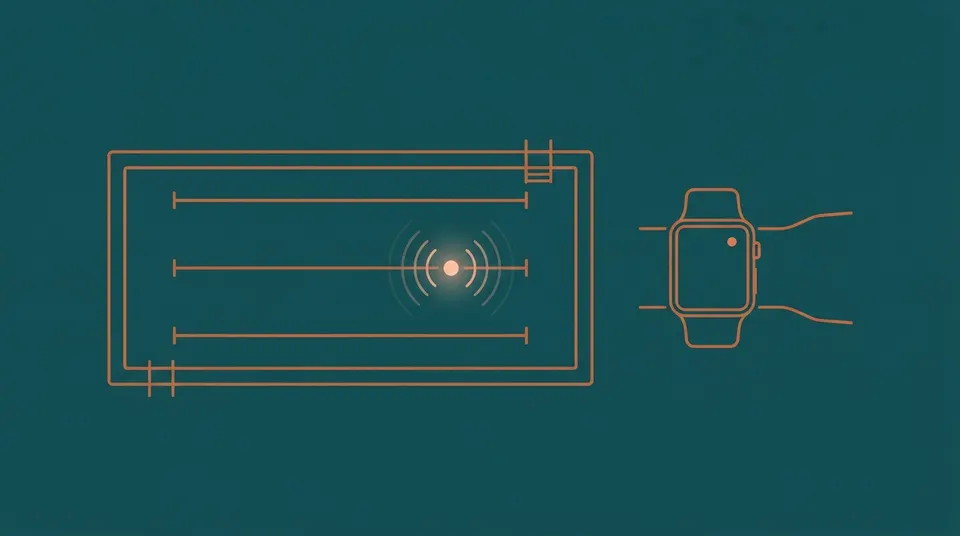
How the alarm sounds. This is half of the project, and it is most often underestimated. In the Cologne Stadionbad pool, according to the description of the operator KölnBäder, the cameras are aimed only at the water surface, the dangerous situation is recognized in about thirty seconds, and the signal comes to the rescuers on the smartwatch indicating the location on the pool plan. This is an exemplary scheme: not a monitor in the back room, but a device on the hand of the one who will run, plus a coordinate where to run.
Who is in this market
Lynxight (Israel, founded in 2018) — connects to regular video surveillance cameras, which lowers the entry threshold; received investment from Fluidra Ventures. Implementations in Europe (mentioned Cologne) and Australia, including a pilot in Brisbane pools and facilities in Sydney. Operators in the descriptions emphasize that the system does not record or store identifiable images.
Poseidon is one of the oldest players, underwater and surface cameras, the logic of immobility at the bottom.
SwimEye — analysis of activity in the bowl with the notification of rescuers.
AngelEye — underwater cameras with video stream analysis.
PoolView is another solution of the same class.
A useful limitation documented in the review literature is that computer vision systems experience difficulties when swimmers overlap each other in the same area. That is, an overflowing bowl on Saturday is the worst scenario for both man and machine, although for different reasons.
Honestly about the evidence
This section is not found in vendor materials, and that is why it is here.
There are no independent open source efficiency tests. Lynxight claims to work on more than a thousand swimming pools in sixteen countries — it was not possible to find independent confirmation of this figure. There are no clinical or other controlled studies showing a decrease in the number of incidents when implementing such systems in the public domain.
Scientific prototypes give 82-86%. In peer-reviewed works on computer vision for the detection of drowning, relative accuracy indicators of the order of 82.1%, 83.4% and 85.8% appear. These are research prototypes, not commercial products, and the numbers cannot be transferred to products, but they give an idea of the order of complexity of the task.
Industry research names two barriers. In the ukactive report on drowning detection systems, operators cited the cost and number of false alarms as the main obstacles. Two important risks are also noted there: that the system creates a false sense of security for rescuers, and that there is no standardized way to integrate screen surveillance into the 10:20 rule.
Standardization. According to one of the vendors, the ISO protocol for computer vision systems in public swimming pools is being prepared, and the vendor participates in the work of the committees. It was not possible to confirm the existence of such a document from independent sources; when choosing a supplier, this question should be asked directly and asked for a link to the number of the draft standard.
What follows from this. Do not "do not implement". Something else should be done: implement it, realizing that you are buying a second observer with a sensitivity unknown in accuracy, and that the evidence base is based not on a certificate, but on your own test protocol and reaction regulations. How to write this into the contract is below.
False alarms: the main enemy of the project
The critical event detection system does not die because it missed something. She's dying because she's been wrong too many times and the staff has stopped responding to her.
Vendors give their figures — for example, about one false positive every three weeks in one of the interviews — but this is a self-assessment, not a measurement in your conditions. The actual frequency depends on the loading of the bowl, glare, children's games (a child frozen at the bottom in the game "who will stay longer" is exactly the picture that the system is obliged to consider dangerous), slides, waves, water aerobics.
What to do with it practically:
Measure, not discuss. The pilot counts the number of alarms per shift, of which confirmed and false, with an analysis of the reasons for each false. This is the main result of the pilot, not a beautiful video.
Adjust the threshold consciously. Sensitivity and false alarms are two sides of the same setting. The decision on the threshold is managerial, not technical: how many false positives per shift are you willing to tolerate in order not to miss the present. We need to discuss this with those who will respond.
Separate types of alarms. Critical (immobility in the water) goes to the lifeguard's watch instantly. Violation of the rules (a child in a deep zone) goes to the administrator's terminal. Mixing them into one channel is a sure way to get critical ones ignored.
Keep a journal and come back to it. Each alarm with a confirmation mark and a video clip. After a month, the log will show you what to configure.
Other critical events at the facility
Drowning is the most obvious, but not the only one.
Falling in the shower, locker room, steam room
Wet tiles, temperature drop, elderly guest, guest after a bath and alcohol. Statistically, this is a much more frequent incident than drowning.
The problem is that this happens exactly in those areas where cameras are not allowed. The solution is sensors that do not form images: millimeter—wave radars and time-of-flight sensors that determine the presence and posture of a person, giving out a cloud of dots, not a picture. They are able to distinguish "standing" from "lying" and fix a sharp change in position. A detailed analysis is in the next article of the series.
Overheating in the steam room
A guest falling asleep in a sauna is a real and underestimated risk. The cheapest scheme of all works here: the bracelet fixes the entrance to the zone, and the time spent is compared with the norm. Exceeding the limit is not a fire service alarm, but a hint to the bath attendant: take a look. In addition, there is a presence sensor inside, which sees that there is someone in the steam room when guests should not be registered there.
For the sauna, it is worth laying the opposite scenario: there is no one, and the temperature is maintained. This is about money, but the same sensor works.
The lost child
The most frequent incident of the water park and the most difficult in terms of emotions. What really helps:
- a bracelet with zonal markings gives the last known zone and time;
- The Bluetooth tag in the same bracelet gives a real-time zone;
- exit control: a child with a child fare should not leave the perimeter without an adult — the turnstile can do this;
- regulations: who announces, who goes where, according to what plan. Without regulations, the most accurate system gives only a coordinate, not a solution.
Accumulation, evacuation, "who stayed inside"
When evacuating, one answer is needed: how many people are inside and in which zones. Turnstiles with bracelets give a list of those who entered and those who did not leave — this is the most reliable source, because it is based on counting, not on recognition. Counters on zones add distribution.
It is worth deciding in advance the technical detail: how the system behaves when the turnstiles are opened in an emergency. If the doors open during a fire alarm and people flow, counting through the aisles stops working, and an alternative way of fixing the exit is needed.
Single shift staff
Bath attendant, cleaner, operator in the technical area. Here you need both a coordinate and a button: a label with an alarm button and a zonal binding is a typical industrial solution that is rarely used on objects with wet zones, but is inexpensive.
Equipment for control of risk zones
Cameras and an analytics server for the bowl, an operator's workplace, a bracelet for monitoring time in hot zones.
Dome IP camera for pool areas
Waterproof chamber, resistant to condensation and chlorine. It works with temperature changes.
Request a KPDVR and video analytics server
Recording, archive and analytics: counting visitors, zone control, event notification.
Request a KPWorkplace of the video surveillance operator
Monitor wall, management program and delimitation of rights. For large objects with a security service.
Request a KPSilicone RFID Wristband for Wet Areas
One bracelet is a pass, a locker key and a guest bill. Withstands water, chlorine and high temperature.
Request a KPPersonnel as part of the system
Equipment without regulations is useless. The minimum set of decisions that need to be made before installation:
Who receives the signal. The device is on the hand of the one who reacts. The monitor on the post is an add—on, not the main channel.
What's in the signal. Type of event, place on the plan, time. Without a place, the signal is useless.
Who confirms and how. The lifeguard presses confirmation on the watch or on the terminal. An unconfirmed alarm is escalated to the administrator after N seconds.
What happens next. A short one-page algorithm, worked out in exercises, not read.
How it is fixed. Automatic recording of the fragment, log, analysis of the shift.
What they teach. The main risk is a false sense of security, recorded in an industry study. The training should say directly: the system is the second observer, the first remains human, and the observation of the water is not canceled.
What is the law and regulations in Russia
Sanitary requirements. Operation of swimming pools is regulated by SP 2.1.3678-20 (section on swimming pools and appendix with hygienic requirements for the purpose of swimming pools): norms of the area of the water mirror, including per person, water temperature, water exchange, air above the water. Since March 1, 2025, the requirements for bound chlorine have changed. This does not directly concern tracking, but the area norms per person are your permissible load, that is, the very number that the counting system should control.
Requirements for rescuers. They are established not by sanitary rules, but by rules for the protection of people's lives on water bodies, adopted at the regional level, and internal documents of the facility. This means that there is no single federal answer to the question "how many rescuers and where they stand" — you need to look at the acts of your region. Hence the practical conclusion: it is impossible to use the introduction of automation as a justification for the reduction of rescuers until it is verified according to the current requirements of the region; and in any case, industry practice insists that the system complements, not replaces, personnel.
Video surveillance. Cameras in changing rooms, showers, toilets, baths and steam rooms are unacceptable. In the bowl area, video surveillance is possible with proper information and legal grounds. The storage of incident records is a separate issue: the record becomes evidence, and the retention period should be sufficient to parse the claim. For more information, see the legal article of the series.
Responsibility for the automation solution. There is no analogue of the European regulation of artificial intelligence in Russian law, and the operator of the object, not the supplier of the model, is responsible for the consequences. Therefore, the conversation about what will happen if the event is missed should be conducted at the contract stage.
What to write in the contract
For systems related to the safety of people, the contract is more important than the specification. Minimum:
- The purpose of the system is an auxiliary means of alerting personnel, not a substitute for surveillance. The wording protects both sides and sets the right expectations for the staff.
- Coverage — which parts of the bowl and zones are controlled, which are not, with a plan and a list of blind spots.
- Acceptance criteria — test report with simulated events (dummy, trained employee), number of attempts, proportion of detections, time to alarm.
- The rate of false positives is measured on the pilot and recorded as an operational indicator with a procedure for revising settings.
- Alarm delivery channel — devices, delivery time, behavior when the connection is broken and when the device is discharged.
- Health monitoring — how the object finds out that the camera or analytics are not working; acceptable downtime.
- Training and exercises — periodicity, who conducts, how it is fixed.
- Service — reaction time, equipment replacement, model updates, and what happens to settings after the update.
- Data — what is stored, how much, who has access, how records are issued on request.
Checklist for talking to the supplier
- Surface cameras, underwater or a combination? What is required of the bowl?
- What are the signs of an alarm being raised and what is the time before the alarm is declared?
- How does the system behave when the bowl is fully loaded and when the swimmers are superimposed?
- What about glare, wave, slides, water aerobics?
- What is the measured frequency of false positives on objects of our type?
- Where does the alarm come from, what is contained in it, how is it confirmed?
- What happens when the connection is broken, the power is turned off, the lens is fogging up?
- What images are stored and are they stored at all?
- Are there independent tests or certifications? Is there a link to the draft standard?
- Is it possible to conduct tests with simulated events at our facility before purchasing?
- What objects of the same profile can I visit and talk to rescuers?
- How is the supplier's responsibility formulated in the contract?
Let's assemble the guest security outline
We will analyze the risk zones, the order of delivery of the alarm to the staff and the reaction schedule — together with the equipment.
- We will respond within a working day
- Let's clarify the task, the zones of the object and the restrictions
- We will propose a solution, a pilot order and an estimate
Is it more convenient in the messenger?
+79262103289Employees respond from 9:00 to 23:00 Moscow time, every day
How can we help
Video surveillance
We design and install video surveillance for organizations: halls, reception, warehouses, perimeter and Parking.
IP-видеонаблюдениеСКССетевое оборудованиеСерверы и СХД
ACCESS CONTROL SYSTEM
Turnstiles, wristbands, readers and lockers associated with 1C: the guest has passed, the visit has been written off, and the report card converges with the checkpoint.
SigurТурникеты и браслетыБраслеты и шкафчикиСКУДLow-voltage systems
Structured Cabling and local area networks, Wi-Fi, video surveillance, access control systems, sound and video in the halls, server rooms — from survey and project to commissioning and executive documentation. It is better to connect at the construction stage, but we also work with existing facilities.
СКСIP-видеонаблюдениеЗвук по зонамСКУДFrequent questions
Is it possible to reduce rescuers by installing such a system?
It follows from the fact that there is no. The requirements for rescuers are determined by regulations, and industry practice and facility operators themselves insist that the system complements the staff. The economic effect here is not in staff reduction, but in reducing the likelihood of a serious incident and in the quality of incident analysis.
How reliable are such systems?
There is no independent data on efficiency in open sources; scientific prototypes show 82-86%, vendors claim more. The working approach is to conduct tests with simulated events at your facility and record the result in an act.
What about false alarms?
This is the main operational risk. Measure the frequency on the pilot, separate the channels of critical and non-critical alarms, adjust the threshold with those who respond, and keep a log.
How to close the locker room and shower, where cameras are not allowed?
Sensors without imaging: millimeter-wave radar, time-of-flight sensors, thermal matrices. They give presence, number and posture. The analysis is in the next article.
Do I need a separate system for detecting falls?
For wet areas and locker rooms — yes, it's a different physics and different sensors. In the halls and corridors, a fall can be detected by video through an assessment of the pose, if the camera is already there and the angle is suitable.
Where to start if the budget is limited?
With three inexpensive things that give the greatest effect: time control in the hot zone by bracelet, presence sensors in the locker room and shower, regulations and exercises for a lost child. Drowning detection is the next step, and it should be approached with a pilot.
Sources
Sources
- Rule study 10:20, 2025 — rescuers are not able to view the zone every ten seconds
- ukactive report on drowning detection systems — barriers to implementation, risk of false sense of security
- KölnBäder, drowning detection in the Stadionbad pool — implementation scheme, recognition time, smartwatch notification
- Fluidra Ventures about investing in Lynxight
- Pilot in Brisbane swimming pools, implementation at Whitlam Leisure Centre
- Overview of strategies for preventing drowning using AI — logic of the systems, restrictions on the imposition of swimmers
- SP 2.1.3678-20 — sanitary and epidemiological requirements, including for swimming pools
Other articles in the series
Cameras and AI: how people, zones and routes are actually considered
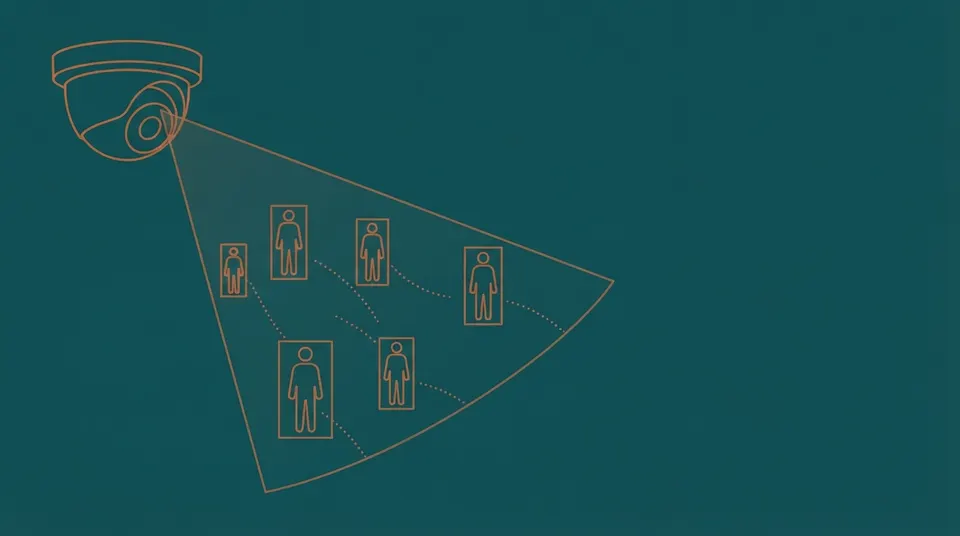
Which models really count people in 2026, what do the MOTA and IDF1 figures mean for the management report, why the guest's through route through forty cameras is the most expensive and fragile promise in video analytics, and why re—identification does not work in principle at the water park. Plus a separate warning about the "counting unique visitors" modules on face recognition.

Without a camera and without a tag: radars, time-of-flight sensors, LiDAR and thermal matrices
You can't put a camera in the locker room, shower and steam room, but you need to know what's going on there — both for safety and for operations. We disassemble sensors that do not form an image: 60 GHz radars, flight time sensors, LiDAR and thermal matrices. What they can do, where they break down, and why the meter with 95% accuracy by the evening shows twenty-five non-existent people in the building.
Hybrids, a guest smartphone and large open areas
In a real project, one technology almost never works — a combination works, and the only question is which one. We analyze how radio and inertial sensors are formed, why the room plan is a free source of accuracy, what the application on the guest's smartphone really gives, and how tracking is arranged in an open area: park, glamping, skiing, festival.