Comparison and selection: what to take and what will it cost
The result of the series: a summary table of all tracking technologies, a selection tree, nine typical scenarios with recommended stacks, a cost of ownership structure (where cable is more expensive than equipment), a restriction bypass matrix, a pilot plan for 4-8 weeks, a checklist of technical specifications and a forecast for 2026-2028.
If you are only reading this article, you need three things: a summary table, a scenario similar to your object, and a pilot plan. They are here.
If you have completed the entire series, everything that was disassembled in it is collected here, in a form suitable for technical specifications and for talking with suppliers.
One note about the numbers. The following are the cost orders from open sources — foreign reports and materials from manufacturers. They are suitable for estimating the scale and cost structure, but not as an estimate: the cost of a particular project is determined by the area, design, required accuracy and the state of the infrastructure of the facility. The rule from the methodical article also applies here: a digit without conditions is not a digit.
Summary table: All technologies on one screen
| Technology | What measures | Accuracy | Label | Smartphone | Recognizes a person | Water and steam | Price order | Regime in the Russian Federation | Maturity 2026 |
|---|---|---|---|---|---|---|---|---|---|
| Turnstile with a bracelet | Passages, events | Point of passage | Need | I don't | Yes | Great | Low | The usual | Mature |
| RFID HF (wristband) | Events at reading points | Reading point | Need | I don't | Yes | Great | Low | Normal, without frequency permissions | Mature |
| RFID UHF (portal, grid) | Zone, presence | Zone, declared up to 0.6 m | Need | I don't | Yes | Worse for water and metal | Medium | Check the band 866-868 | Mature |
| 3D counter, flight time sensor | Flow, employment | 93-99 % of the account was declared | I don't | I don't | I don't | OK, except direct sun | Low — medium | As a rule outside the PD | Mature |
| LiDAR | Flow, position in volume | 95-99 % of the account was declared | I don't | I don't | I don't | Good | Medium | As a rule outside the PD | Mature |
| Radar 60 GHz | Presence, posture, fall | Presence, 0.5–2 m | I don't | I don't | I don't | OK, execution under the conditions | Low — medium | As a rule outside the PD | Average |
| Bluetooth RSSI | Zone, proximity | In fact, the zone | Need | Opts. | Yes | Moderately, not under water | Low | The usual | Mature |
| Bluetooth AoA | Coordinate | Declared 0.3–1 m | Need | I don't | Yes | Moderately | Medium — high | The usual | Mature |
| Bluetooth Channel Sounding | Distance, coordinate | 0.3–1 m, worse in a real situation | Need | Opts. | Yes | Moderately | Medium | The usual | Early |
| UWB | Coordinate | 10-30 cm in good conditions | Need | I don't | Yes | Good | High | Check the lanes by GKRCh | Mature |
| Wi-Fi, service requests | Flow (unreliable) | 5-15 m, ID destroyed | I don't | Need | I don't | — | Low | Controversial and binding | Degraded |
| Wi-Fi RTT (802.11az) | Distance | ~1 m in line of sight, ~5 m without it | I don't | Need a plus app | I don't | — | Low | The usual | Early |
| Wi-Fi Sensing (802.11bf) | Presence, movement | Presence | I don't | I don't | I don't | Unknown | Low | Requires study | Early |
| Video and AI | Flow, zones, routes | Percentage units at the entrance; routes are unreliable | I don't | I don't | Optional | Bad in steam and on the water | Medium — high | Normal; faces — biometrics | Mature |
| Specialized drowning detection | Critical event | The time before the alarm is tens of seconds | I don't | I don't | I don't | Main application | Medium — high | The usual | Average |
| Guest Application | Coordinate by agreement | 1-5 m | I don't | Need | Yes | The phone is in the locker | Low on iron | Consent | Mature |
| GNSS and LoRaWAN | Position outside | Declared 10-20 m outside | Need | I don't | Yes | Outside | Medium | The usual | Mature |
The selection tree
Three questions from the first article and the conclusion to which they lead.
1. Can I give the guest a carrier?
No → counters and sensors at the entrances and in the zones; video where allowed; application for those who install it. The routes of a particular person are not available, and this must be accepted.
Yes - > moving on to the second question.
2. Do I need a personality reference?
No → impersonal bracelet: events and routes without personal data in the analytical loop. The undervalued and most relaxed legal regime.
Yes → the bracelet associated with the contract; the accounting contour is separate from the analytical one.
3. Need a real-time reaction?
No → events on reading points plus counters. Cheap, reliable, enough for most management tasks.
Yes, by zones → add Bluetooth receivers in key zones or presence sensors.
Yes, with the exact coordinate → UWB in those zones where it is really needed, the rest is zonal.
And a security question on top of everything: will your decision change if the accuracy is ten times worse? If not— buy a cheap option.
Nine typical scenarios
1. Thermal spa complex, 3000 m2, wet areas, bar, steam rooms
Tasks: zone loading, queue at the entrance, bar conversion, locker turnover, time in hot zones, surcharges, child search.
Stack: HF passive bracelet for everyone + readers at seven to eight points (entrance, wet zone, lockers, bar, steam room, premium zones, exit, surcharge terminal); 3D counters at the entrance group and at the entrances to large areas; radar presence sensors in the locker room, showers and dressing room; video surveillance in the lobby, at the reception, in the cafe; active Bluetooth tags selectively for children and staff; analytical contour in the accounting database with the integration of cash registers and locks.
What not to take: UWB for the entire area, Wi-Fi analytics (phones in lockers), face recognition, cameras in wet areas.
Where the money is: readers and cable, meters, integration. The biggest return is from what already exists: the events of bracelets and locks.
2. Water Park
Tasks: safety on the water is a priority; capacity of the slides; capacity of the bowl; search for a child; deposit and surcharges.
Stack: the same as the thermal spa complex, plus specialized detection of drowning on the bowl; active tags for children; counters at the entrances to the slide zones; enhanced exit control.
What not to take: re-identification by video (all in swimsuits), end-to-end routes by cameras.
Where the money is: the water safety system and the video infrastructure for it.
3. Fitness club
Tasks: actual attendance of halls and classes, loading of zones at peak times, turnover of lockers, retention.
Stack: club card or bracelet + readers at the entrance and in the halls; counters at the entrances to the zones; Bluetooth receivers in the halls, if you need attendance without attachment; integration with 1C:Fitness and schedule.
What not to take: coordinate systems, facial biometrics (decided by the card).
4. Sauna or small SPA, up to 300-500 m2
Tasks: loading by the hour, visit time and surcharges, security in the steam room.
Stack: bracelet or card, readers at the entrance and in the steam area, one or two presence sensors, counter at the entrance. Everything.
What not to take: almost everything else. For an object of this size, analytics is collected from events, and hybrids are redundant.
5. Amusement park, quest, immersive show
Tasks: script synchronization, group skipping, queues, security on the territory.
Stack: UWB in scenes where the effects are tied to the position (as in the disassembled case — on the performers, not on the audience); bracelets with reading points on the locations; virtual queue on the schedule; GNSS and LoRaWAN in the open area; counters at the entrances to the pavilions.
What not to take: an attempt to link effects to each guest on the entire area is a project of a different budget.
6. Museum, exhibition, Congress center
Tasks: attendance of halls, popularity of exhibits, routes, content.
Stack: counters at the entrances to the halls (the basis); Bluetooth beacons plus a content application; QR checks as an alternative to the application; video analytics in large spaces.
What not to take: Wi-Fi analytics, facial recognition.
7. Shopping mall, food court, HoReCa
Tasks: passability, conversion of zones and tenants, peaks, the effect of events.
Stack: 3D counters at the entrances and at the anchor zones — the foundation; LiDAR or radar in the atriums; video analytics selectively; guest Wi-Fi with authorization as a channel for working with the audience (with a full legal outline).
What not to take: passive collection of MAC addresses and de-randomization.
8. Workshop, warehouse, production site
Tasks: time on sites, rapprochement of man and technology, presence in hazardous areas, search for tools and equipment.
Stack: UWB in hazardous areas and where a coordinate is needed; Bluetooth zones in the rest of the area; UHF portals for tool delivery; radars in hazardous areas; local act and familiarization of workers before launch.
What not to take: coordinate coverage of the entire area, if decisions are made by zones.
9. Clinic, hospital
Tasks: search for equipment, presence and fall of patients, time of procedures.
Stack: Bluetooth tags on equipment plus receivers in the corridors (the most payback); radars in wards and bathrooms; access events by zones.
What not to take: video surveillance in the wards.
Economics: the structure of the cost of ownership
Where does the money go
| Article | Share | Note |
|---|---|---|
| Survey and project | Small, but critical | Without it, the arrangement of equipment will be incorrect |
| Equipment (sensors, readers, anchors, cameras) | Noticeable, but not the main one | It is she who is shown in the commercial offer |
| Cable, power supply, installation, commissioning | Basic for coordinate systems | According to open estimates, 60-85 % of the project budget |
| Server side and storage | Average | For video — essential: archive, storage, uninterruptible power supply |
| Licenses and subscriptions | Average, recurring | Count for three years, not a year |
| Integration and analytics | Undervalued | The part without which data does not turn into solutions |
| Consumables | Permanent | Bracelets lose and break; batteries of active tags |
| Maintenance | 15-25 % of the cost of equipment per year according to open estimates | Including response to sensor failures |
| Training and regulations | Small | And at the same time determining whether the system will work |
Open reference points by order
All figures are from external sources, indicating the nature of the assessment:
- anchor UWB — 120-350 € plus installation, according to the RTLS cost summary;
- UWB infrastructure for submeter accuracy — 15-40 € per m2, approximately 30-60 anchors per 5000 m2 (same summary);
- the anchor density is one per 150-300 m2 according to Pozyx recommendations;
- the UWB tag is $ 40-100 in one estimate, up to £ 100-300 per equipped unit in another;
- cable work and survey — from 60 to 85% of the budget according to various open estimates;
- The three—year cost of ownership for a fleet of 500 tags is $ 350-800 thousand plus 15-25% per year for service, according to an estimate of 2026.
Three rules that save the most
The area is more expensive than objects. It is cheaper to equip two hundred tags per 1000 m2 than twenty tags per 10,000 m2. Reducing the area where high accuracy is required is the main lever of economy.
Zone cheaper coordinates. The transition from "know the point" to "know the zone" reduces the number of receivers by a multiple with the same management result for most tasks.
What is already worth it is cheaper than the new one. The events of bracelets, locks, turnstiles and ticket offices at most facilities are already being collected and are not being read. The first stage of almost any project should start here.
The "constraint - > bypass" matrix
| Restriction | Cheap bypass | Expensive bypass |
|---|---|---|
| RFID does not give a continuous track | More reading points in key locations | Active tag in the bracelet, receivers by zone |
| Bluetooth in terms of signal strength gives only a zone | Adopt a zonal model and build reports on it | Angular determination or phase measurement of distance |
| UWB is expensive due to the density of anchors | UWB only in critical areas, zonal scheme in the rest of the area | Full coverage; wait for equipment with a narrowband assistant |
| The label is not readable underwater | Treat the disappearance as a separate state, rely on reading points | Hybrid with sensors in the bowl area |
| MAC Randomization broke Wi-Fi Analytics | Replace the task: counters at the inputs | Guest Wi-Fi with authorization and full legal outline |
| The guest's phone is in the locker | Refuse scenarios on a smartphone in wet areas | — (not complete) |
| The camera goes blind in a pair | Take the camera out of the steam zone, change the angle | Radars and time-of-flight sensors in the zone |
| Cameras are not allowed in the locker room | Sensors of presence without an image, locks, deposit | Combination of radar and the second physical principle |
| Re-identification does not work in swimsuits | Collect a route by bracelet | — (video does not solve this problem) |
| The counter accumulates a busy error | Daily reset and reconciliation with the turnstile | Bi-directional sensors with overlap |
| Fall detection is immature | Time monitoring in the zone by wristband plus staff bypass | Radar plus floor vibration, simulation tests |
| The application has installed percentage units | QR checks without installation | A loyalty program with real value |
| False alarms extinguish trust | Separate channels of critical and non-critical events | Customizing the model for the object, repeated iterations |
| Data does not turn into solutions | One screen, five digits, one action | Analytical circuit and regular cycle of experiments |
A typical set for an item with users
The bracelet and the access controller, the video analytics server and the accounting database are the basis, which are supplemented according to the scenario.
Silicone RFID Wristband for Wet Areas
One bracelet is a pass, a locker key and a guest bill. Withstands water, chlorine and high temperature.
Request a KPAccess controller for a group of access points
Manages turnstiles, doors and locks of the entrance group. Stores events at home and continues to let guests through, even if the connection to the server is lost.
Request a KPDVR and video analytics server
Recording, archive and analytics: counting visitors, zone control, event notification.
Request a KPThe accounting database for your data
A web database for accounting that has outgrown Excel, but does not fit the standard program: contracts, objects, rights, counterparties and relationships between them. Fields and relationships are described by the setting, so we quickly assemble the database for your process and refine it without rewriting.
Request a KPPilot in 4-8 weeks
The only way to find out the real numbers on your object. A plan that can be inserted into the contract.
Week 0. Preparation. Identify one or two tasks that we check, and the criteria for success in numbers. Prepare a plan of the object with zones. Assign a responsible person on your side. Mark up control points.
Weeks 1-2. Deployment. Equipment — for rent or on a return basis. The minimum configuration is for one or two zones, not for an object. Basic measurement of what happened before: manual counting, unloading of existing events.
Weeks 3-5. Operation and measurements. Acceptance measurement according to the protocol from the methodical article: static by control points, routes, empty object and rush hour. For security systems — tests with simulated events. Daily log: alarms, failures, false alarms, staff comments.
Weeks 6-8. Conclusions. Comparison with criteria. Reconciliation with an independent source. Calculating the cost of a full deployment based on the actual density of the equipment, not an estimate. Solution: deploy, change the configuration, or refuse.
What must be included in the pilot agreement:
- who pays for the equipment and installation during the pilot, and what happens when the project is abandoned;
- The measurement protocol and success criteria are in numbers;
- Access to raw data, not just vendor reports;
- conditions for the transition to full implementation and fixing the price of equipment based on the results of the pilot;
- what is considered an unqualified pilot.
Separately: the pilot must include rush hour. The pilot, conducted on a weekday at a quarter load, did not check anything that is important.
Antipatterns
Bought accuracy, which is not used. The most expensive mistake in the topic. Verification is a control question about a tenfold deterioration in accuracy.
Bought data instead of solutions. The system is working, the dashboard exists, decisions are still made intuitively. It is treated by the appointment of the system owner and a cycle of experiments.
We put the equipment where it is impossible. Cameras in locker rooms and showers. It turns out at the first complaint.
They took "counting unique visitors" without reading how it works. If it is based on facial recognition, you have bought biometrics along with the entire legal regime.
They believed the accuracy figure from the presentation. Without percentile, conditions and density of equipment, the figure is unverifiable.
Missed the basic measurement. Now it is impossible to prove the implementation effect — neither to yourself nor to the owner.
Not associated with the accounting system. Four sources give four different attendance figures, and instead of working with the data, there is a dispute about which one is correct.
Did not foresee who is serving. A year later, a third of the sensors are silent, and no one knows about it, because there is no equipment status screen.
We chose equipment not for Russian bands. UHF readers in the US version; checked before purchase, not after.
Saved on the examination. Arrangement "by area" instead of arrangement by design — and then adding anchors and readers is actually more expensive.
Where is everything going in 2026-2028
Seven areas to keep an eye on if the planning horizon is more than a year.
Phase measurement of distance in Bluetooth will become widespread. The specification is being developed (Core 6.0 - > 6.2 - > 6.3 in May 2026), the chips are serial, research is underway on unconnected modes for a large number of labels. Practical consequence: an ordinary bracelet will be able to give a distance, not just a zone. What to do now: choose tags on chips with support so as not to change the fleet.
The new generation of UWB will reduce the number of anchors. The 802.15.4ab standard with a narrowband assistant, the first chips (ST64UWB, March 2026) and research receivers with a claimed fourfold increase in range address the main drawback of UWB — the cost of dense infrastructure.
UWB chips will also become radars. In the new families, the radar sensing function appears. This brings positioning and presence detection closer together: one device instead of two.
Wi-Fi Sensing will reach certification. The standard has been published, the chips have appeared, there is no Wi-Fi Alliance certification yet. When it appears, "presence without a device and without a camera" will become a regular function of network equipment — with a separate legal and ethical conversation.
Multimodal models will move closer to the object. So far, they are suitable for searching through the archive and analyzing incidents. As the models decrease and the performance of accelerators increases, some of these tasks will go to the facility.
Water safety will be standardized. Industry work on the protocol for evaluating computer vision systems for swimming pools is underway; the appearance of such a document will change the conversation with suppliers — there will be something to refer to instead of vendor figures.
Responsibility for personal data will continue to grow. The changes of 2024-2025 — administrative structures for leaks with negotiable fines and a criminal article for data trafficking — are already being applied. This leads to a practical strategy: collect the minimum, depersonalize early, restrict access. This is cheaper than any measures taken after the incident.
One-page technical task checklist
- Tasks and solutions. What management decisions are made according to the system. Not "analytics", but a list of solutions.
- Metrics. What we measure, in what units, with what frequency, with what we compare, which source is the main one for each metric.
- Zones. Map item layout with zone boundaries and a unified directory of names.
- Required level by zone. Where there is enough presence, where the zone is needed, where the coordinate is, where the real time is.
- Accuracy. CEP50 and CEP95 by zone, permissible fraction of zone error, 95th percentile delay.
- Capacity. Maximum number of placemarks and users, behavior during rush hour.
- Environmental conditions. Temperature, humidity, condensate, chlorine, splashes, IP version, service life under these conditions.
- Data. Uploading raw events via API, single session ID, time synchronization, retention periods, depersonalization, execution of requests from subjects.
- Integration. Accounting system, cash register, locks, access system, CRM. Idempotency of exchange.
- Legal outline. Grounds for processing, notification, informing, explicit prohibition of face recognition (if not planned), areas without surveillance.
- The radio frequency part. Bands, capacities, EAEU compliance documents, the need for frequency assignment.
- Operation. Monitoring the health of sensors, notification of failures, service, training, reaction regulations.
- Acceptance. The protocol of measurement, criteria, the order of disagreements, repeated measurement in 3-6 months.
- Stages. What is in the first turn, what is in the second, what requires a pilot.
The whole series
- Where the guest goes and why to know it: a map of tasks and a map of solutions
- How to read the characteristics: accuracy, delay, identity, coverage
- Bracelet as a key: RFID from locker to Flow analytics
- Bluetooth: from Beacons to Channel Sounding
- UWB: centimeters and the price of centimeters
- Wi-Fi: What's left of tracking after MAC randomization
- Cameras and AI: how people, zones and routes are actually considered
- Critical events: drowning, falling, overheating, congestion
- Without a camera and without a tag: radars, time-of-flight sensors, LiDAR and thermal matrices
- Hybrids, a guest smartphone and large open areas
- From trajectory to solution: data, metrics, integrations
- Law: what can and cannot be tracked in Russia
- Comparison and selection: what to take for your task and what it will cost
We will select a stack for your object and budget
Name the object type, area, and tasks. We will propose the composition of the system, the order of queues and the pilot's plan.
- We will respond within a working day
- Let's clarify the task, the zones of the object and the restrictions
- We will propose a solution, a pilot order and an estimate
Is it more convenient in the messenger?
+79262103289Employees respond from 9:00 to 23:00 Moscow time, every day
How can we help
Low-voltage systems
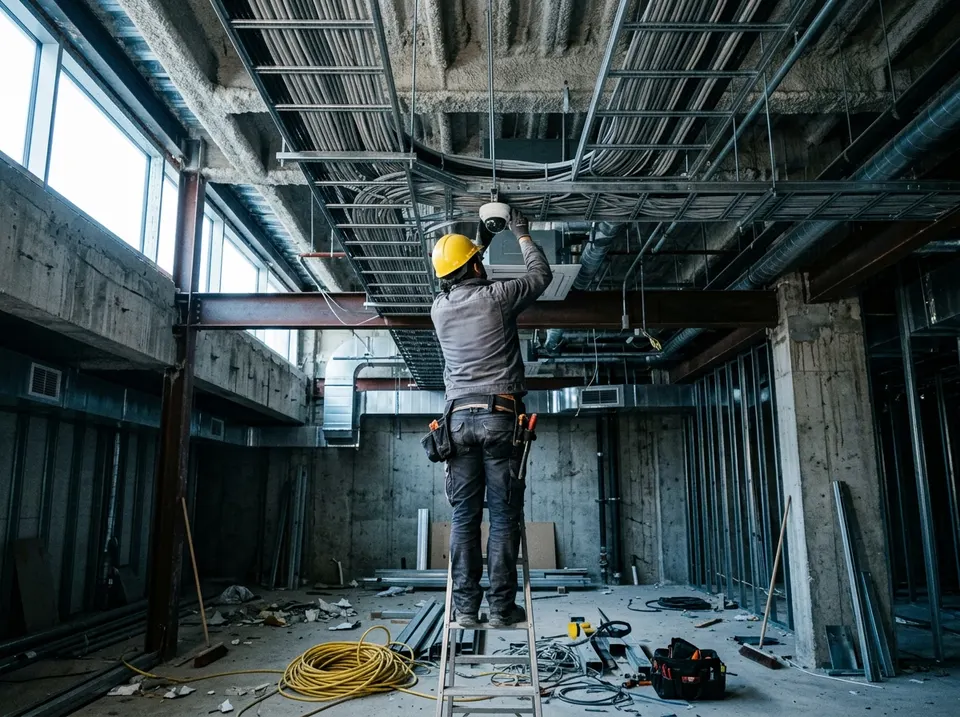
Structured Cabling and local area networks, Wi-Fi, video surveillance, access control systems, sound and video in the halls, server rooms — from survey and project to commissioning and executive documentation. It is better to connect at the construction stage, but we also work with existing facilities.
СКСIP-видеонаблюдениеЗвук по зонамСКУД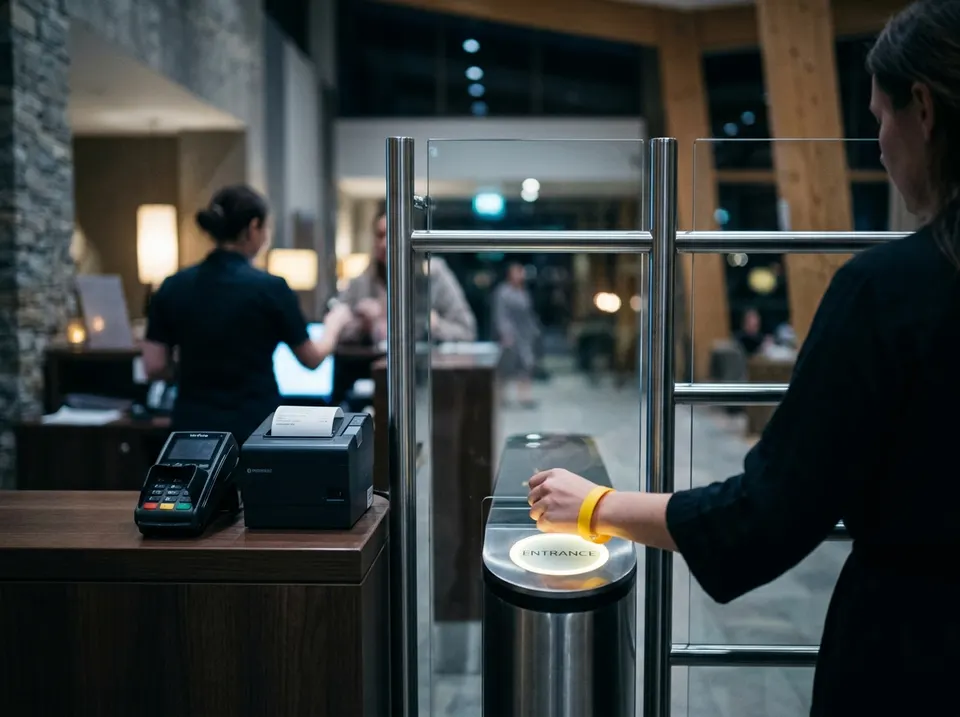
System integration
Turnstiles, ticket offices, 1C, CRM and the site begin to exchange data themselves. Employees stop transferring numbers with their hands.
1ССКУДREST APIЭквайринг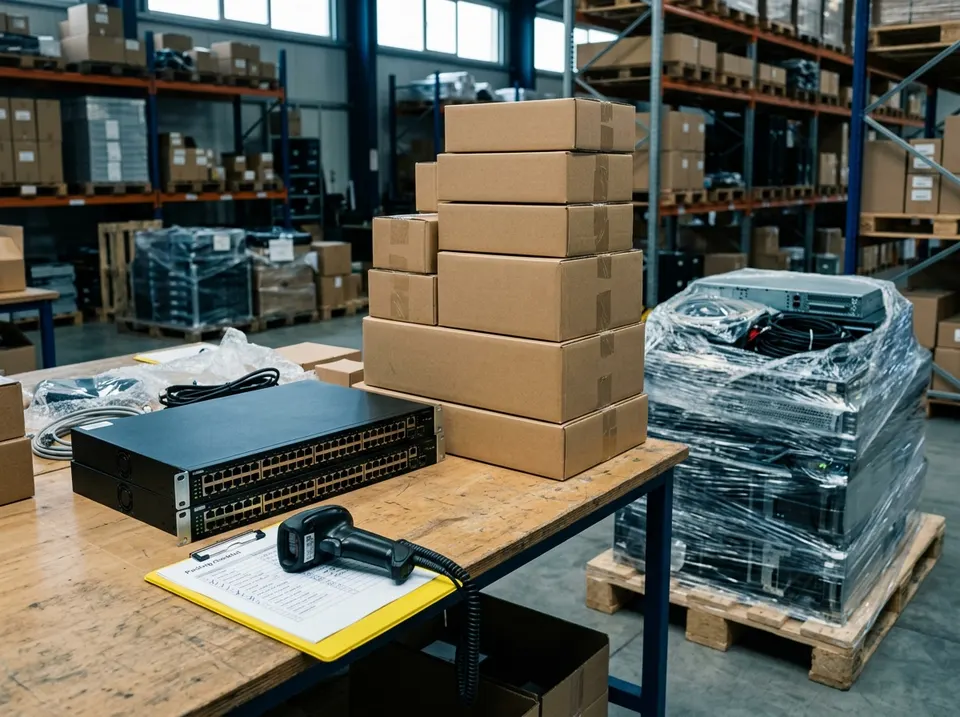
Equipment supply
We deliver separately and as part of the project. We select it for the task, not for the warehouse, and we can design, assemble and configure it ourselves.
Серверы и СХДСетевое оборудованиеТурникеты и браслетыIP-видеонаблюдениеFrequent questions
Where to start if there is nothing?
From the counter on the input group and reading the events of the existing access system. This gives the denominator for all metrics and the session funnel with minimal investment. Then follow the script for your object type.
What to choose: UWB or Bluetooth?
If the question is like this, most likely, you don't need a coordinate, but a zone — and then Bluetooth or bracelet events in general. UWB is taken when there is a specific task that requires centimeters: scenario effects, convergence of man and technology, motion analytics.
Is it possible to do without bracelets?
For counting and loading — yes, with counters and sensors. For the routes of a particular guest and for recording the time of the visit — no, you need a carrier that the guest presents.
How long does the implementation take?
Reading of existing events and the first reports of the week. Meters and sensors — weeks for installation. The coordinate system on the square is months, of which most of it is for inspection, cable work and commissioning, and not for software configuration.
How to convince the owner that it is necessary?
Not by predicting the effect from someone else's case, but by basic measurement: to show what is happening at the facility now, and to name a specific decision that is made based on this data. One proven experiment convinces better than any presentation.
What should I do if the system is already installed and not in use?
Upload raw events, build a session funnel, choose one decision that you are ready to make based on the data, and conduct one experiment with the control. It's cheaper than changing the equipment, and most often it turns out that the problem was not in it.
Sources
Sources
- RTLS Cost Summary — price orders and cost structure (external estimate)
- Pozyx — anchor density (manufacturer's data)
- Comparison of counting and employment methods, 2026
- Overview of human counting technologies — accuracy ranges
- ST64UWB with 802.15.4ab support, narrowband IMEC receiver
- Bluetooth SIG about Channel Sounding
- IEEE 802.11bf status
- GKRCH solution No. 07-20-03-001 with applications — strips for short-range devices
- Reviews of amendments to Article 13.11 of the Administrative Code and practices under Article 272.1 of the Criminal Code (secondary sources, check with current editions)
Other articles in the series
Law: what can and cannot be tracked in Russia
When the movement data becomes personal, which requires 152-FZ from an object with visitors, where cameras cannot be placed categorically, why "counting unique visitors" by persons is biometrics with a special regime, and what responsibility is in effect after the changes of 2025. Plus the radio frequency part: what can be set without permissions, and what can not be bought in the US version.
From trajectory to solution: data, metrics, integrations
Tracking by itself does not bring money — it brings decisions that are made on it. We analyze the session data model, metrics that really change the manager's behavior, why a heat map without normalization is useless, how to measure the implementation effect without fictitious numbers, and where integrations with 1C, cash register and locks break down.
Hybrids, a guest smartphone and large open areas
In a real project, one technology almost never works — a combination works, and the only question is which one. We analyze how radio and inertial sensors are formed, why the room plan is a free source of accuracy, what the application on the guest's smartphone really gives, and how tracking is arranged in an open area: park, glamping, skiing, festival.